to Japanese page
About Kyushu Univ. & Dept. of Materials
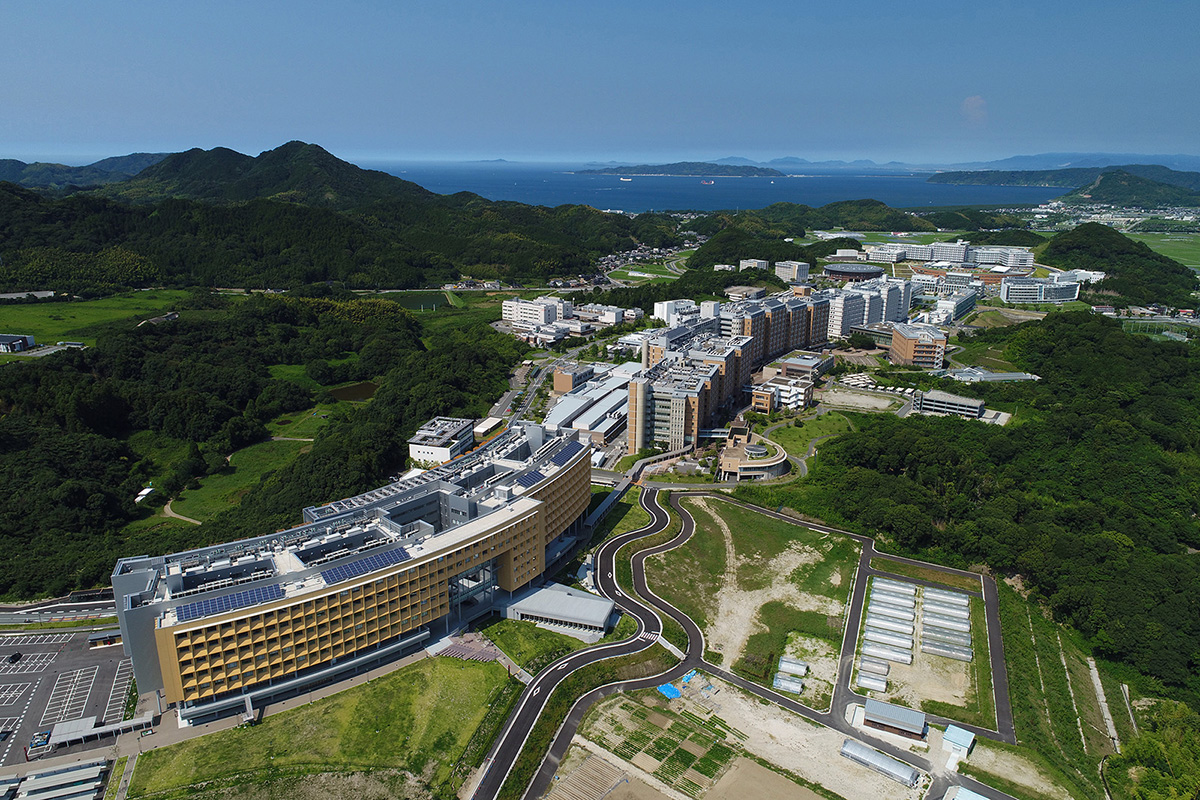
Kyushu University is one of Japan’s leading comprehensive universities, with a long tradition of education and research ranging from fundamental science to applied engineering. The Ito Campus is located in western Fukuoka, at the gateway to the Itoshima Peninsula, offering a unique environment where rich natural surroundings coexist with advanced research and educational infrastructure. The open setting facing the sea and sky provides a calm research atmosphere while maintaining good access to the metropolitan area. The university comprises approximately 8,200 faculty and staff members and 19,000 students, forming a large-scale research university where diverse disciplines converge and interdisciplinary and international collaborations are actively promoted. Our laboratory "Solidification Science and Engineering Laboratory" belongs to the Department of Materials, Faculty of Engineering, Kyushu University within the Metals Science for Structural Materials Group,. The department conducts systematic education and research on metals and inorganic materials, covering materials design, microstructure control, functional properties, characterization, and processing science, from undergraduate education to graduate programs and industry–academia collaboration.
Promotion Video for the Department of Materials, Kyushu University
About Morishita Lablatory
The Morishita Laboratory is a materials science laboratory focusing on casting, solidification, and crystal growth. Our primary interest lies in the scientific understanding of how solidification and microstructures that govern material properties are formed during melting and solidification processes. In recent years, we have also addressed phenomena relevant to metal additive manufacturing, particularly laser powder bed fusion (PBF-LB), where extremely rapid melting and solidification occur. While being motivated by such advanced processes, the laboratory consistently emphasizes the construction of fundamental solidification theory and a physics-based understanding of underlying phenomena, rather than focusing on specific manufacturing methods alone. A key strength of our laboratory is high–time-resolution in-situ observation using synchrotron X-ray imaging, which enables direct visualization of melting, solidification, and crystal growth processes and provides experimental insights that bridge theory, modeling, and real phenomena.

Promotion Video for the Solidification Science and Engineering Laboratory
Educational Philosophy
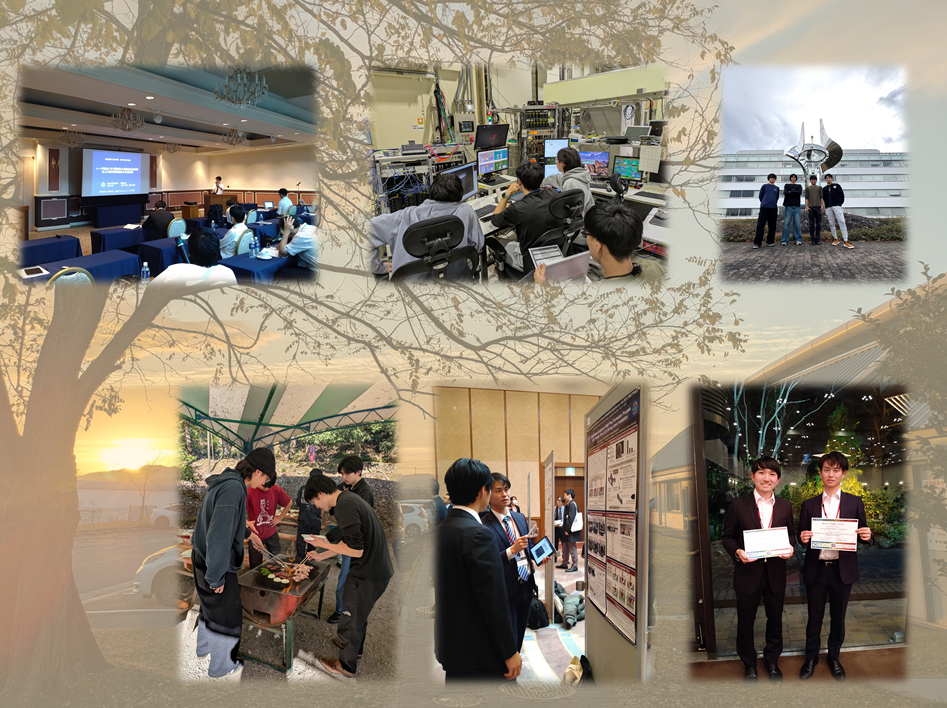
In university lectures, students often learn well-established knowledge and work on problems with clear answers. In contrast, real-world engineering and research frequently involve challenges in which the problems themselves are not clearly defined. Our laboratory regards research activities as practical training for addressing such open-ended challenges.
Through research, students develop the ability to analyze situations, identify key issues, formulate logical approaches, conduct necessary and sufficient experiments, critically interpret results, and communicate their findings in a form understandable to others. We value a research environment that emphasizes active engagement, discussion, and collaboration, where students deepen their scientific understanding through interaction with peers and supervisors. We encourage students to make the most of their time in the laboratory and to use their research experience as a foundation for their next stage, whether in academia or industry.
Research at the Morishita Group
Solidification Physics
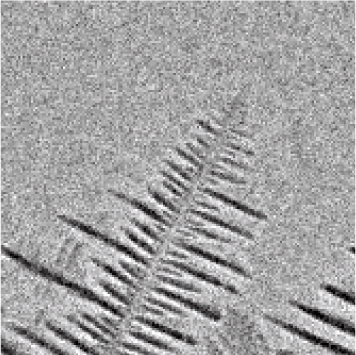
We capture solidification and crystal growth processes in molten metals through in-situ observation, link them with theory, develop models, and pursue a fundamental understanding of the underlying phenomena.

Synchrotron X-ray Imaging
By utilizing the large-scale synchrotron radiation facility SPring-8, we conduct high–time-resolution in-situ imaging to explore previously unexplored regimes of solidification phenomena.
Extreme Solidification
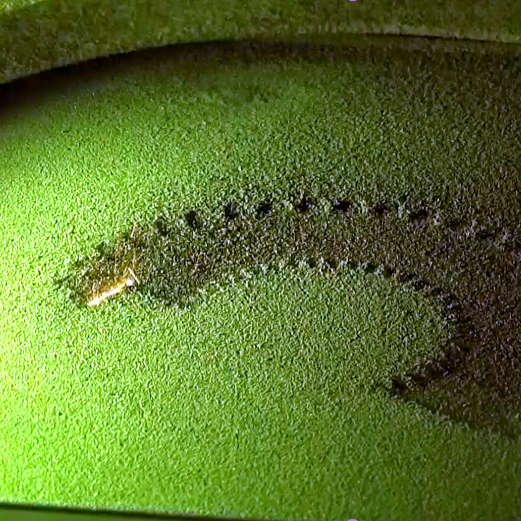
We study extreme thermal fields and solidification conditions in metal additive manufacturing processes, such as laser powder bed fusion (PBF-LB), with the goal of establishing solidification theory.
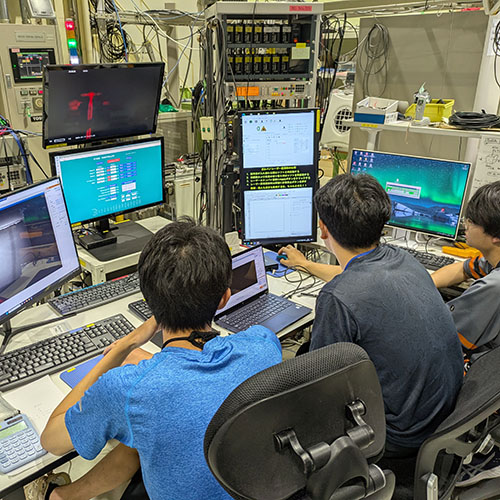
Active Research
Our laboratory provides a research environment in which students actively engage in research and deepen their scientific understanding through experiments, analysis, and discussion.
Get in touch
If you are interested in our research or would like to know more about our laboratory, please feel free to contact us.